Domestic Resource Mobilization: The Private Sector Responds to the Call to Accelerate Malaria Elimination in Senegal
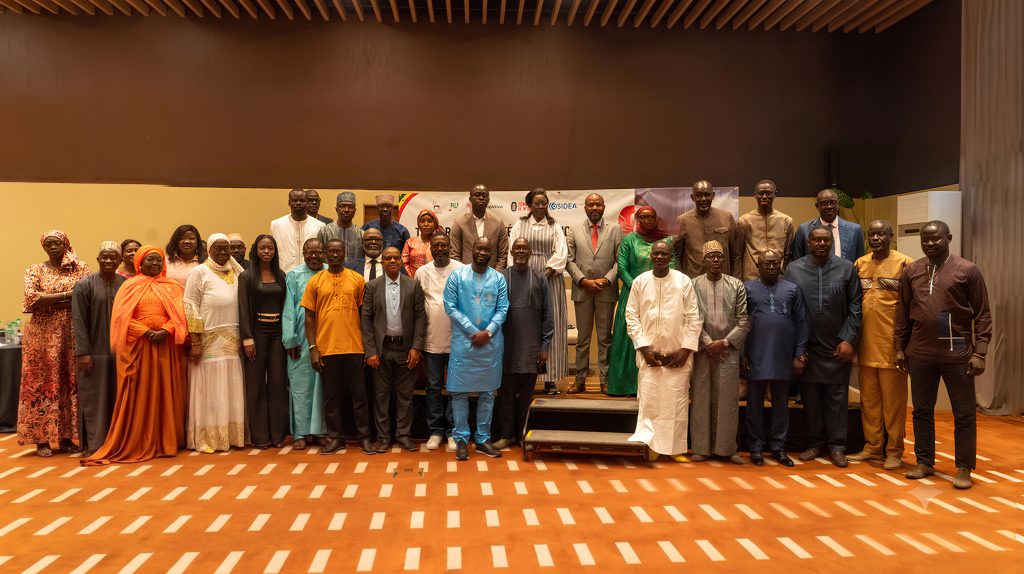
Dakar, June 4, 2026 – As Senegal pursues its ambitious goal of eliminating malaria by 2030, financing has emerged as the most critical challenge to overcome. Convened in Dakar at the initiative of Speak Up Africa, in partnership with OSIDEA and the National Malaria Control Programme (NMCP), representatives from the public and private sectors, local authorities, technical and financial partners, and civil society engaged in a strategic dialogue on domestic resource mobilization to address an estimated financing gap of CFA 146.6 billion.
Held at the Noom Hotel Dakar, the national roundtable brought together the Director General of Health, the WHO Representative in Senegal, parliamentarians, private sector leaders, the Council for the Development of Enterprises in Senegal (CDES), local elected officials, and civil society organizations including Active Citizens for Social Justice (CAJUST), Publish What You Pay (PWYP), and the Extractive Industries Transparency Initiative (EITI). Participants united around a shared conviction: malaria elimination is not only a public health imperative but also an economic priority.
The Last Mile Towards Elimination
In recent years, Senegal has achieved remarkable progress in the fight against malaria. Nevertheless, significant challenges remain.
Sustaining these gains and achieving elimination will require substantial investments in high-impact interventions, including the distribution of long-lasting insecticidal nets (LLINs), seasonal malaria chemoprevention (SMC), strengthened epidemiological surveillance, and mass drug administration campaigns in selected high-transmission areas.
“Senegal must sustain its efforts. Financing needs are becoming increasingly significant during this decisive phase that we often refer to as the last mile towards elimination,” emphasized officials from the National Malaria Control Programme.
A New Reality: The Gradual Decline in External Financing
This mobilization takes place against a backdrop of declining international funding and a growing need to strengthen national health sovereignty.
Participants agreed that increased reliance on domestic resources is no longer optional but essential.
The Director General of Health, Colonel Dr. Youssouph Tine, underscored the importance of a sustainable partnership between public authorities and the private sector:
“We are not calling for one-off financial support. We are calling for a long-term strategic partnership to achieve Universal Health Coverage. This requires co-creation. We therefore encourage companies to integrate malaria control into their corporate social responsibility policies, protect their employees and surrounding communities, and contribute to promoting preventive behaviours.”
Malaria: A Barrier to Economic Development
Beyond its health impact, malaria imposes a considerable economic burden on Senegal.
In 2024, the country recorded more than 429,000 confirmed malaria cases and 314 deaths. These figures translate into productivity losses, absenteeism, increased household healthcare expenditures, and reduced economic performance across several strategic sectors.
In mining, oil and gas, industrial, and agricultural areas, malaria directly affects human capital—the most valuable asset of any enterprise.
According to the WHO Representative in Senegal, malaria elimination remains within reach, provided that adequate financing is secured.
“Senegal has made significant progress towards malaria elimination. Financing remains the main challenge. Diversifying funding sources and establishing innovative financing mechanisms represent major opportunities to support national elimination efforts.”
A Strong Call to Action for Businesses
A key highlight of the roundtable was the call to action delivered by Honourable Mariétou Dieng, Malaria Champion, who emphasized the decisive role of the private sector in this new phase of the fight against malaria.
“I wish to make a special appeal to companies operating in the extractive, industrial, and financial sectors. Your activities contribute significantly to our nation’s economic prosperity. Today, you have a historic opportunity to safeguard Senegal’s most valuable asset—its human capital—by focusing on those most affected by this disease: pregnant women and children under five.”
The Malaria Champion further stated:
“Let us make Corporate Social Responsibility a lever for impact through a clear doctrine: ‘CSR: ZERO MOTHERS AND CHILDREN LOST.’ Let us position Senegal as a laboratory for public-private partnerships that save lives. To ensure the effectiveness of our actions, we strongly advocate for the establishment of a permanent framework for dialogue, monitoring, and accountability, enabling us to measure the real impact of every franc invested on the ground.”
Her intervention also highlighted that investing in malaria elimination is a direct investment in productivity, social stability, and economic growth.
Encouraging Commitments from the Private Sector
The roundtable showcased the growing willingness of the private sector to contribute to the national response.
Companies and organizations such as WAVE, MANAGEM/Boto SA, Woodside, BP, CANAL+ Senegal, and the Council for the Development of Enterprises in Senegal (CDES) expressed their readiness to support national efforts through initiatives aligned with their respective areas of expertise.
Several avenues for engagement were identified, including:
- Strengthening accountability and prioritization for malaria through:
- the development of a financial tracking tool to monitor private sector and local government contributions to health;
- the expansion of the citizen oversight committee to include the Directorate General of Health (DGS), EITI, PWYP, and CAJUST;
- the establishment of a formal framework bringing together civil society, the Ministry of Health, EITI, Speak Up Africa, and OSIDEA to support health financing in Senegal;
- Promoting malaria prevention, awareness, and financing through Corporate Social Responsibility policies aimed at protecting human capital;
- A commitment by the President of CDES to support malaria awareness activities and the distribution of malaria commodities to 1,000 small and medium-sized enterprises (SMEs);
- Commitments from MANAGEM, WAVE Senegal, and BP, demonstrating the willingness of companies operating in these sectors to contribute actively to malaria elimination efforts;
- CANAL+ Senegal’s pledge to continue supporting mosquito net distributions in 2026 in areas where coverage gaps persist;
- EITI’s commitment to better integrate malaria-related issues within extractive industries operating in high-burden regions (KKT), disseminate malaria priorities through its regional platforms, and incorporate recommendations on priority malaria financing into its next report to the President of the Republic.
The example of CANAL+ Senegal received particular recognition. Since 2021, the company has supported malaria control initiatives through its partnership with Speak Up Africa. This commitment has included the procurement of mosquito nets for Quranic schools (daaras) in Touba, the provision of bicycles to community-based home care providers (DSDOMs), and the dissemination of public awareness campaigns. At the continental level, the CANAL+ Group has contributed more than USD 1.5 million to malaria control efforts.
Towards a New National Compact for Malaria Elimination and Universal Health Coverage
At the conclusion of the discussions, participants reached consensus on the need to institutionalize dialogue among government institutions, the private sector, local authorities, and civil society in order to accelerate domestic resource mobilization.
WHO and the Directorate General of Health welcomed the integration of Universal Health Coverage into the proposed private sector commitments, recognizing its potential to ensure that no one is left behind and to improve UHC coverage indicators, which are directly linked to the incidence of priority diseases, including malaria.
Participants reaffirmed their commitment to establishing a sustainable consultation framework, developing an operational roadmap, and formalizing concrete commitments to support the implementation of the 2026–2030 National Strategic Plan for Malaria Elimination.
More than a health objective, malaria elimination has now become a strategic choice for Senegal’s economic future.
Looking ahead to 2030, the success of this ambition will depend on the ability of all stakeholders to transform today’s commitments into sustainable investments that benefit the most vulnerable populations and contribute to the country’s long-term development.