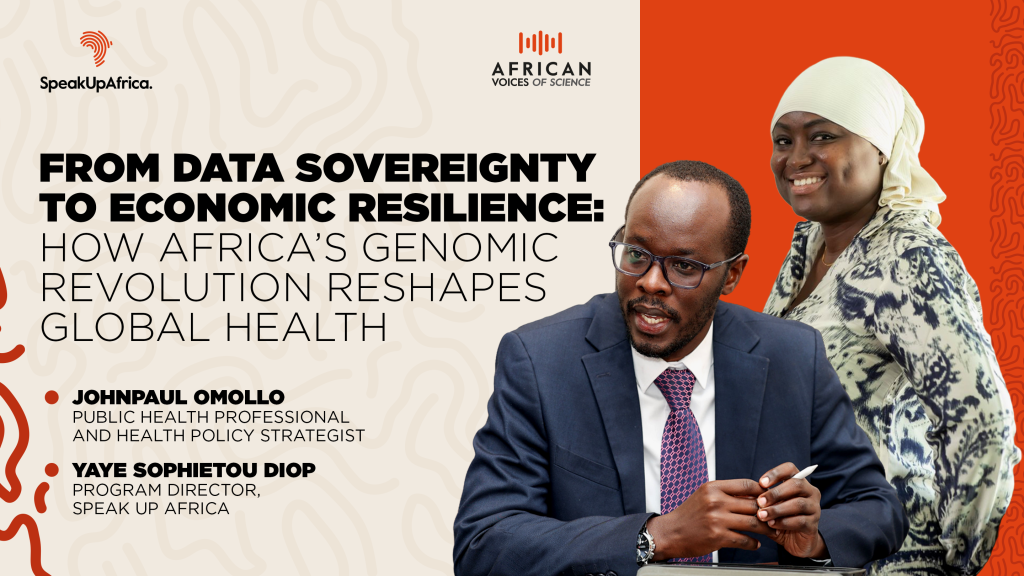
From Data Sovereignty to Economic Resilience: How Africa’s Genomic Revolution Reshapes Global Health
The Invisible Crisis: Why African Genomes Remain Absent from Global Medicine
By John Paul Omollo & Yaye Sophietou Diop
Imagine receiving a genetic test result that leads to unnecessary treatment simply because the diagnostic tool was never validated using people with your genetic background. For millions of Africans, this is not a hypothetical risk, it is a consequence of one of the biggest blind spots in modern medicine. Although Africa is home to the greatest human genetic diversity and nearly 17% of the world’s population, African genomes remain significantly underrepresented in the datasets used to develop diagnostics, precision medicines and disease prediction models. This is not simply a scientific gap; it is a health equity challenge with global implications. The COVID-19 pandemic demonstrated both Africa’s scientific potential and the consequences of decades of underinvestment. African scientists played a critical role in identifying and sharing new variants, yet limited sequencing infrastructure highlighted the need for stronger domestic capacity. Beyond pandemics, genomics is becoming central to cancer care, antimicrobial resistance, rare diseases and precision medicine. Without greater African representation, health disparities will continue to widen because the evidence guiding medical decisions remains incomplete. For decades, Africa has contributed data that others analyse and transform into innovations. The question is no longer whether Africa should participate in the genomic revolution, but whether it will help lead it.
Beyond Representation: The Case for Genomic Sovereignty
Addressing this imbalance requires more than increasing African representation in international databases. It requires genomic sovereignty, the ability of African countries to generate, govern, analyse and apply their own genomic data according to national and continental priorities. Genomic sovereignty strengthens healthcare by improving diagnostic accuracy and making precision medicine more relevant for African populations. It also enhances health security through stronger genomic surveillance and creates economic opportunities by positioning African institutions as strategic partners in biotechnology and pharmaceutical innovation. In other words, genomics is no longer only about healthcare. It is becoming a strategic investment in scientific competitiveness, economic resilience and national development.
African Investment in African Genomics
For too long, advanced scientific infrastructure has relied heavily on donor support. While international partnerships remain essential, long-term leadership requires greater African investment. A promising example emerged during the World Health Summit Regional Meeting in Nairobi, where Biolinx Africa, the YTO Foundation and Nextgen Molecular Lab announced a precision medicine initiative spanning Kenya and Côte d’Ivoire. Supported by Equity Bank, the initiative will establish one of the region’s most advanced sequencing platforms through the acquisition of a NovaSeq X Plus system. More importantly, Equity Bank’s investment sends a powerful signal: African financial institutions increasingly view genomics not simply as a scientific endeavour, but as a strategic economic opportunity. It demonstrates that domestic capital can help drive scientific excellence and reduce dependence on donor funding.
The Power of South–South Collaboration
Scientific leadership also requires stronger collaboration across the continent. The partnership between Kenya and Côte d’Ivoire illustrates how countries can pool expertise, share infrastructure and harmonize research standards rather than building isolated centres of excellence. Such cooperation reduces costs, accelerates discovery and enables more institutions to benefit from cutting-edge technologies. This model reflects a broader vision in which African science advances through partnership rather than competition.
From Scientific Excellence to Scientific Influence
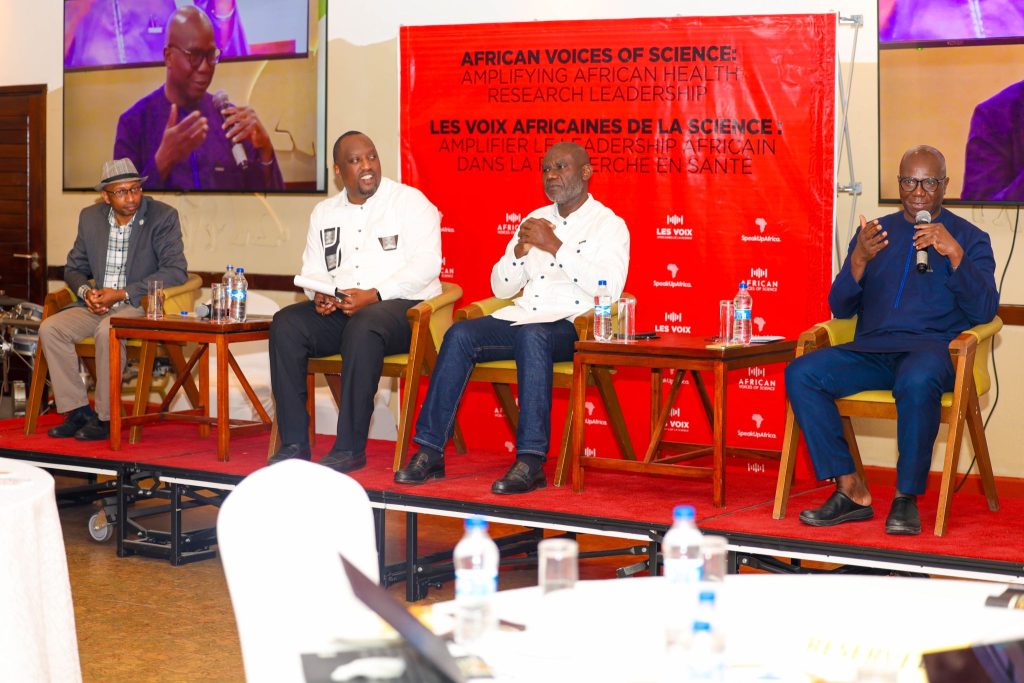
Scientific discoveries only create impact when they influence policy and investment. Initiatives such as the African Voices of Science (AVoS) help bridge this gap by equipping African scientists with the communication and advocacy skills needed to engage policymakers, investors and the public. In genomics, this is particularly important. Scientists must be able to explain why genomic infrastructure is essential for stronger health systems, why investment generates long-term economic returns and why Africa’s genetic diversity is a strategic asset rather than simply a scientific resource. By strengthening scientific leadership beyond the laboratory, AVoS is helping ensure that evidence informs policy, investment and continental health priorities.
Building Sustainable Financing
The Equity Bank partnership represents an important milestone, but lasting transformation will require financing models that can be replicated across Africa. Blended finance offers one promising solution by combining philanthropic guarantees with commercial investment to reduce risk and unlock private capital. Similar approaches have already mobilized billions of dollars for sectors such as education and could accelerate investment in sequencing infrastructure, digital platforms, workforce development and biotechnology innovation. The objective is not to replace development assistance but to complement it with financing mechanisms that make Africa’s genomic ecosystem more resilient, sustainable and locally driven.
Creating an Enabling Policy Environment
Investment alone is insufficient without supportive policy frameworks. Momentum is already growing. AUDA-NEPAD has identified genomics as a continental priority, while the World Health Organization’s Resolution on Genomic Medicine and national strategies such as Kenya’s genomic roadmap demonstrate increasing political commitment. Broader frameworks like the Lusaka Agenda further reinforce country ownership, data sovereignty and resilient health systems. Together, these initiatives provide the governance needed to transform isolated projects into a coordinated continental movement.
A New Era of African Leadership
Africa’s growing investment in genomics is reshaping the global health landscape. As sequencing capacity expands and scientific expertise grows, African institutions will increasingly become partners in research and innovation rather than simply sources of data. Countries investing today will be better positioned to attract research collaborations, biotechnology investment and highly skilled talent. This transformation extends beyond improving diagnostics or disease surveillance. It is about positioning Africa as a leader in precision medicine and global health innovation. The foundations are being built through African investment, stronger regional collaboration, supportive policies and a new generation of scientific leaders. The question is no longer whether Africa has the capacity to lead its genomic future. The question is how quickly the global health community will embrace Africa as an equal partner in shaping the future of precision medicine.
References
- Sirugo, G., Williams, S. M., & Tishkoff, S. A. (2019). “The Missing Diversity in Human Genetic Studies.” Cell, 177(1), 26-31. Analysis of representation bias in major genomic databases. https://doi.org/10.1016/j.cell.2019.02.048
- World Intellectual Property Organization. (2022). “Global Innovation Index: Collaborative Innovation Networks.” Data on comparative efficiency of networked versus siloed innovation models.
- World Health Organization. (2024). “Health Financing Profile: Kenya.” WHO country-specific health expenditure analysis.
- Mastercard Foundation & World Bank. (2023). “Blended Finance for Education in Africa: Results and Scaling Strategy.” Impact evaluation of de-risking mechanisms in commercial lending.
- African Union Development Agency. (2024). “AUDA-NEPAD: Scientific Priority Sectors, 2024-2035.” Strategic planning document identifying genomics as continental research priority.