Ending HIV Is a Test of Our Values And We Are Running Out of Time
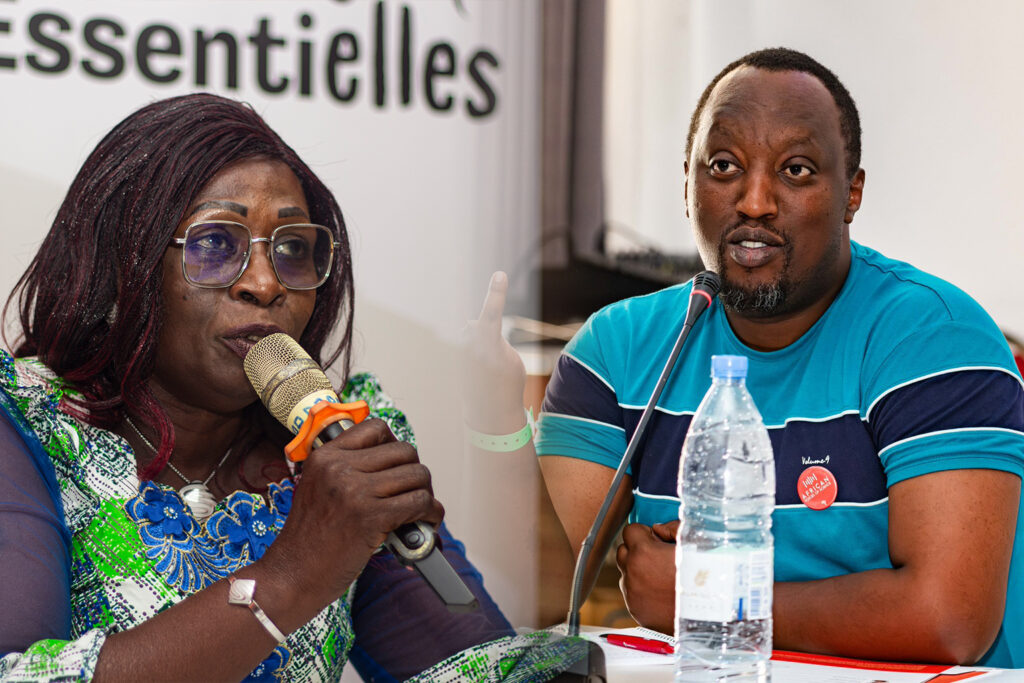
By Dr. Christian Rusangwa & Josiane Adja N’Koh Kouame
Ending HIV is no longer a scientific challenge. It is a moral choice, and the world has five years left to make it.
We often speak about the end of AIDS as a technical objective. But for us, as an African scientist and a community advocate, the issue is profoundly human. Behind every statistic is a life that could have been saved, a family that could have remained whole, a future that could have been protected. The tools exist. The science is ready. What is missing is the courage to confront the inequities keeping this epidemic alive.
A Future That Could Be Reality
Picture a world where no baby is born with HIV, where no adolescent girl loses her future to a preventable infection, and where people living with HIV are neither feared nor judged. This world is entirely within reach. Yet reaching it will require us to stop treating equity as optional.
History will not remember how advanced our technologies were. It will remember whether we chose to make them accessible to all.
Inequity Still Shapes Who Lives and Who Dies
If anyone still believes HIV is “under control,” they need only look at who remains most affected.
In sub-Saharan Africa, two-thirds of people living with HIV reside here, and adolescent girls and young women account for over 60% of new infections. In Eastern Europe and Central Asia, new infections are rising, driven not by biology, but by punitive laws and the criminalization of people who use drugs. Even wealthy countries fail to protect Black, brown, migrant and LGBTQI+ communities.
These disparities are not accidental. They are the direct result of political choices, social norms and underinvestment in the people who understand their communities best.
And this is why we insist: African scientists and civil society organizations must be at the center of decision-making. We know the realities. We know the barriers. And we know what works. Yet we remain underfunded and sidelined in global policy spaces.
We Have Achieved the Impossible But Progress Is Fragile
We should acknowledge how far we have come. At the height of the epidemic, access to treatment was a privilege reserved for a few. Today, more than 30 million people receive antiretroviral therapy. AIDS-related deaths have fallen by 70%. New prevention tools (self-testing, injectable PrEP, long-acting treatments) are revolutionizing choice and autonomy.
But as political attention fades and resources stagnate, this hard-won progress is now at risk.
In 2023 alone, 1.3 million people were newly infected and 630,000 died of AIDS-related causes. Meanwhile, global funding is declining, and the inequities we saw during COVID-19 are resurfacing. The Global South waited for vaccines. Now, it risks waiting for the full benefits of HIV innovation as well.
The Last Mile Is About Courage, Not Technology
Ending HIV requires more than new tools. It requires ending the injustices that make some people more vulnerable than others.
We need governments willing to repeal discriminatory laws that force people underground. We need societies willing to challenge stigma that still prevents people from seeking care. We need leaders willing to fund prevention with the seriousness it deserves.
These failures are not inevitable. They are tolerated, and therefore changeable.
Africa Is Leading, But Cannot Do It Alone
ICASA demonstrates how African researchers, practitioners and community leaders are shaping solutions adapted to our realities. But global solidarity is weakening, and donor fatigue is real.
This is why we argue that ending HIV will depend on three shifts:
1. Domestic financing must increase.
Countries most affected cannot rely indefinitely on unpredictable external aid. Sustainable systems require local investment.
2. Local partnerships, especially with the private sector, must be activated.
Businesses benefit from a healthy workforce. They must be encouraged, even incentivized, to support innovation and access to prevention and treatment.
3. Multilateral agencies must reinforce accountability and elevate the leadership of high-burden countries.
There can be no effective global HIV response without shifting power toward those most affected.
A Call to Action
We stand at a crossroads. Ending HIV is no longer about discovering new science, it is about dismantling old injustices.
The question is simple: Do we have the courage to choose equity?
If we do, the first generation that witnessed the start of this epidemic could also witness its end. If we do not, history will judge us not by what we knew, but by what we refused to change.
The end of HIV is possible. The deciding factor will be political will, and our collective belief that every life, everywhere, has equal worth.
About the Authors
Dr. Christian Rusangwa is an African Voices of Science (AVoS) champion and the Director of Technical Assistance at Muso, where he leads efforts to expand community-driven health initiatives. His work underscores the critical role of evidence-based strategies and robust technical support in scaling community-led responses.
Mrs Josiane Adja N’Koh Kouame is the Vice-President of AP-SDRi and an Auditor of the Réseau Voix Essentielles Côte d’Ivoire. She advocates for civil-society-centered health policy, emphasizing inclusive participation to address structural inequities and drive lasting change.
About Voix Essentielles
Mrs. Josiane Adja N’Koh Kouame is a founding member of the NGO GNOUWIETA. She has held several leadership positions within the organization and actively contributes to the defense of human rights and social well-being. Since 2024, she has served as Vice President of the Network Agir pour la Promotion de la Santé et des Droits Sexuels et Reproductifs inclusifs (AP-SDRi) and Auditor of the Réseau Voix Essentielles Côte d’Ivoire. She advocates for health governance centered on civil society, and promotes inclusion as a lever to combat structural inequalities and drive sustainable change.
About African Voices of Science Iniative (AVoS)
African Voices of Science (AVoS) is a continental initiative powered by Speak Up Africa to strengthen Africa’s voice and leadership in global health research, development, and innovation (RD&I). Established in 2020, AVoS brings together leading scientists, researchers, and policy advocates from across the continent to amplify African perspectives, influence policy, and drive investment in African-led health solutions. By elevating African expertise in global health discussions, AVoS seeks to improve health outcomes, bolster Africa’s health security, and unlock the continent’s vast economic potential in the health sector.
Date of publication
Category
Program