World Malaria Day: In Benin, the launch of a report on malaria in the Francophone world calls for increased mobilization for a malaria-free future
Press Release, Cotonou, April 27, 2026 — To mark World Malaria Day, observed on April 25 under the theme “Driven to End Malaria: Now We Can. Now We Must.”, Benin hosted a series of high-level activities from April 24 to 26, bringing together policymakers, technical and financial partners, civil society, youth, researchers, athletes, and media around a shared objective: accelerating malaria elimination in Francophone Africa.
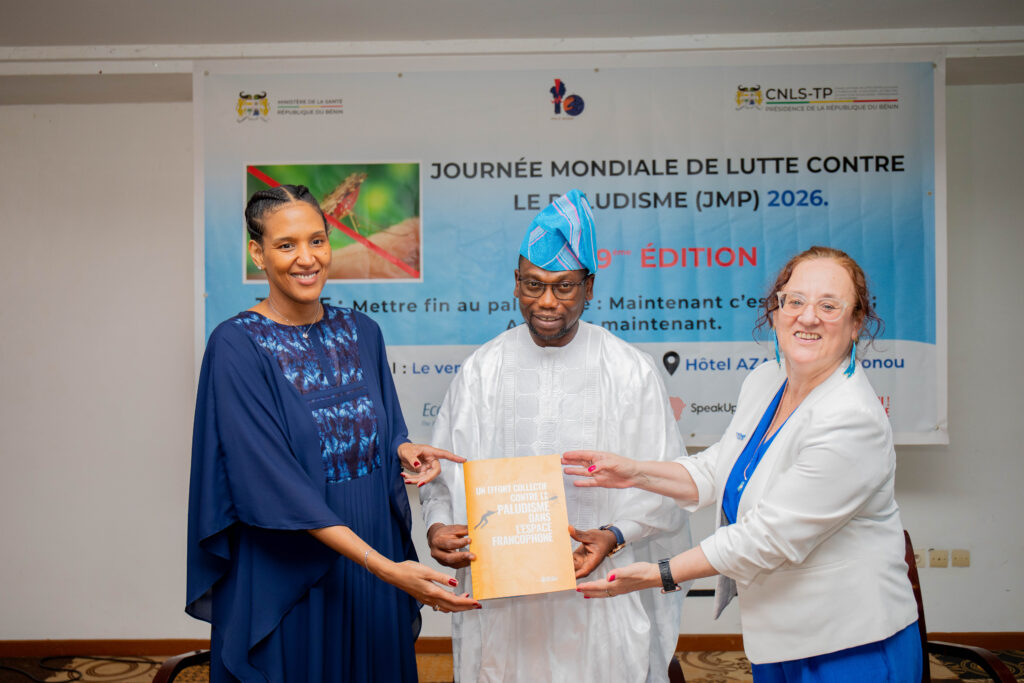
A key highlight of this mobilization was the official launch of the report “A Big Push Against Malaria in the Francophone World” by Benin’s Minister of Health, Professor Benjamin Hounkpatin. The report sheds light on a concerning reality: while Francophone countries represent only 13% of the global population at risk of malaria, they account for more than 42% of cases and 40% of deaths. It calls for strengthened collective action across key priorities, including domestic and international financing, innovation, private sector engagement, and whole-of-society mobilization.
Professor Hounkpatin emphasized the report’s importance in shaping public policy and international advocacy: “The report on malaria in the Francophone world highlights a reality we can no longer ignore: our region is on the front line. But it also shows that progress is possible when political leadership, financing, and collective mobilization come together. Benin remains committed to continuing its efforts and advancing this ambition at both regional and international levels.”
This ambition is already reflected in tangible results. In recent years, Benin has emerged as a model of leadership, having nearly quadrupled its national malaria budget between 2022 and 2025. This progress, driven by a multisectoral approach involving government, parliamentarians, civil society, and the private sector, has contributed to a significant reduction in the disease burden.
In this context, Speak Up Africa has played a key role in mobilizing stakeholders through its various initiatives, driving clear calls to action for malaria elimination. As highlighted by Yacine Djibo, Executive Director of Speak Up Africa: “Through this World Malaria Day, we aimed to transform a moment of awareness into a true catalyst for action. The report we are launching today is a clear call: we must act now, collectively, to save lives and finance a malaria-free future.”
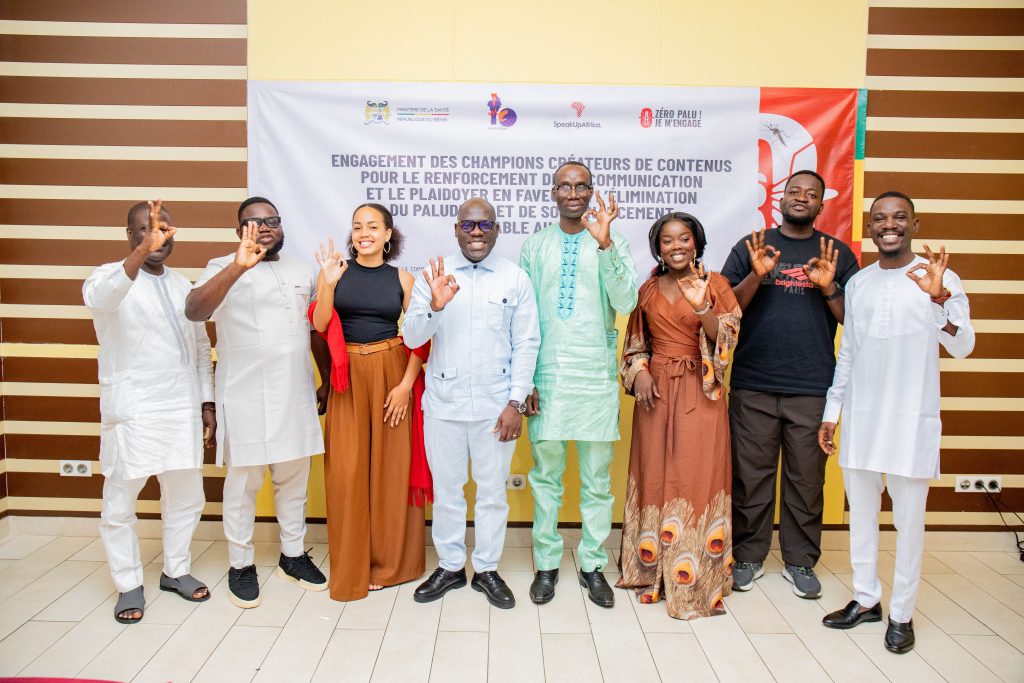
The activities organized in Benin built on the momentum of the Speak Up Africa in Action platform, previously deployed during the Africa Cup of Nations earlier this year. The initiative aims to engage broad audiences through sport, culture, and impactful storytelling. In Benin, this translated into a series of activations combining high-level advocacy, community engagement through Voix EssentiELLES, and youth mobilization, particularly through a Media Day, a storytelling workshop, and a 3X3 basketball tournament in partnership with the I AM Foundation.
This approach, which places youth and communities at the center of the response, was championed by prominent figures from the world of sport, including Khalilou Fadiga, former Senegal international and co-captain of Zero Malaria Football Club. He emphasized the role of sport as a powerful driver of social change: “Malaria is a reality that millions of families face every day. As a former athlete, and above all as an African, I believe we all have a role to play. Through sport and youth engagement, we can raise awareness, mobilize communities, and drive change.”
At the global level, partners also stressed the urgency of accelerating efforts amid increasing pressure on funding and the risk of resurgence. As noted by Dr. Michael Charles, CEO of the RBM Partnership to End Malaria: “The Big Push Against Malaria is a call to accelerate action, strengthen coordination, and protect hard-won gains. Benin is leading the way with strong political commitment and tangible results. We must now scale up these efforts regionally to keep malaria elimination at the forefront of development priorities.”
Beyond this national moment, the messages conveyed in Cotonou resonate across the entire Francophone space.
In a context marked by a growing global funding gap for malaria, the need to strengthen health sovereignty, maintain international solidarity, fully engage the private sector, accelerate innovation, and place women, youth, and communities at the center of strategies is more urgent than ever. This mobilization also feeds into a broader ambition: positioning Benin as a leading voice in Francophone advocacy for the adoption of an ambitious malaria resolution at the upcoming Francophonie Summit in November 2026.