In Kédougou, Health and Mining Sector Stakeholders Join Forces to Mobilize Resources for Malaria Elimination
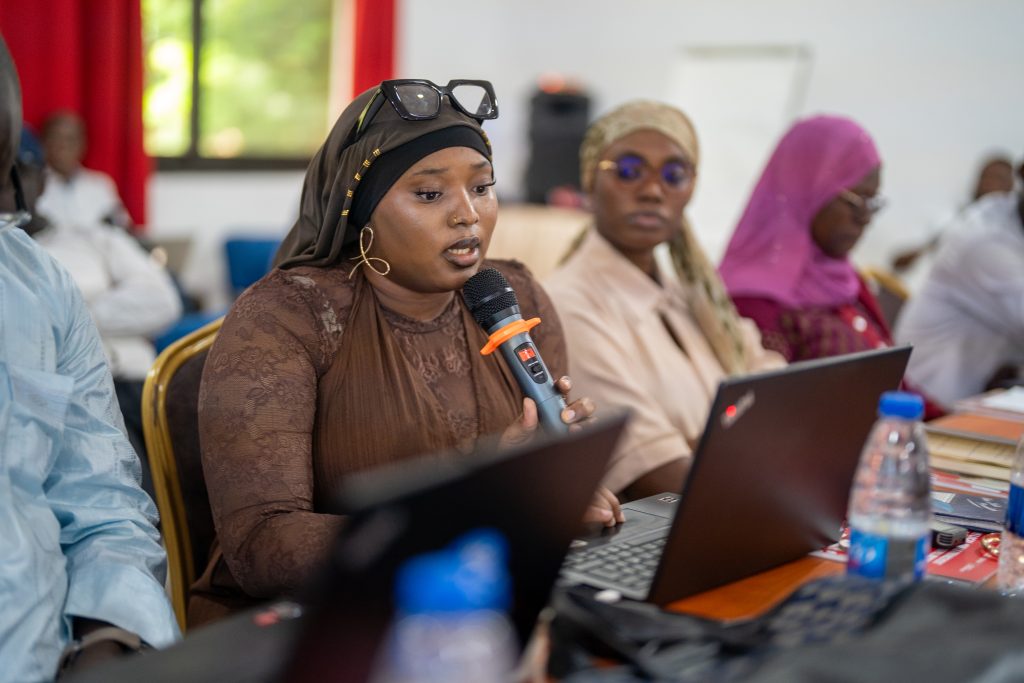
The Kédougou Declaration lays the groundwork for a more coordinated partnership between mining companies, local authorities and health stakeholders.
Kédougou, Senegal — 21 October 2026
How can resources generated by local economic activity be better mobilized to accelerate malaria elimination? This was the central question addressed by 64 participants who gathered in Kédougou on 21 October 2026 for the Local Forum on Domestic Resource Mobilization for Malaria Elimination.
Organized by Speak Up Africa in partnership with the Endeavour Mining Foundation, the National Malaria Control Programme (Programme national de lutte contre le paludisme, PNLP), the Observatory for Monitoring Economic Development Indicators in Africa (Observatoire de Suivi des Indicateurs de Développement Économique en Afrique, OSIDEA), and local stakeholders, the Forum was held under the chairmanship of Mr. Mouhamadoul Moustapha Gueye, Deputy Governor of the Kédougou Region.
Bringing together administrative and health authorities, mining companies, local governments and other development stakeholders, the Forum had a shared objective: to strengthen synergies between the public and private sectors and better direct available resources towards the health priorities of local communities.
The discussions culminated in the adoption of the Kédougou Declaration, which sets out six strategic priorities to strengthen domestic resource mobilization, improve the coordination of interventions and promote more transparent tracking of health investments.
Kédougou: A Strategic Region for Malaria Elimination
Despite Senegal’s progress in combating malaria, the Kédougou Region remains one of the country’s main malaria transmission hotspots. In 2025, 61,482 cases were recorded in the region, accounting for approximately one-quarter of all confirmed cases nationwide. Seven malaria-related deaths were also reported, compared with 14 in 2024.
This situation reflects several challenges, including limited access to healthcare services in some communities, population mobility associated with mining activities and artisanal gold mining, and persistent needs in prevention and case management.
In his remarks, Dr. Niène Seck, Regional Director of Health for Kédougou, emphasized that malaria remains a major public health challenge despite the efforts made by the government and its partners. He highlighted how mining companies’ contributions to health financing, particularly malaria control, could support the strategic direction of the National Malaria Control Programme, which aims to eliminate the disease by 2030.
Key health priorities presented during the Forum included ensuring the continuous availability of insecticide-treated mosquito nets, strengthening behaviour change communication, building the capacity of healthcare workers, and implementing seasonal malaria chemoprevention for children aged three months to 10 years.
Protecting pregnant women and strengthening community-based case management are also key priorities. In areas far from health facilities, home-based malaria case management services (PECADOM), community health workers known as dispensateurs de soins à domicile (DSDOM), and community health posts play an essential role in promoting early detection and timely treatment.
These priorities underscore the need to direct available contributions towards interventions informed by documented health needs and the specific circumstances of local communities.
Better Coordinating Investments from the Mining Sector
In a region where extractive industries play a significant role in the economy, mining companies have the potential to become important partners in strengthening health financing. Their community investments and corporate social responsibility (CSR) programmes already support a range of local initiatives.
The challenge now is to better align these interventions with the priorities identified by health authorities and local governments, thereby improving complementarity and outcomes for communities.
Speaking at the Forum, Mr. Mouhamadoul Moustapha Gueye, Deputy Governor of Kédougou, called for increased mobilization in support of the health sector.
“Today, our call is for greater investment in the health sector, stronger support, and better coordination of interventions so that communities can feel the impact more clearly,” he said.
He specifically encouraged mining companies to continue their corporate social responsibility efforts while ensuring that their initiatives are better aligned with development priorities identified by local authorities and communities.
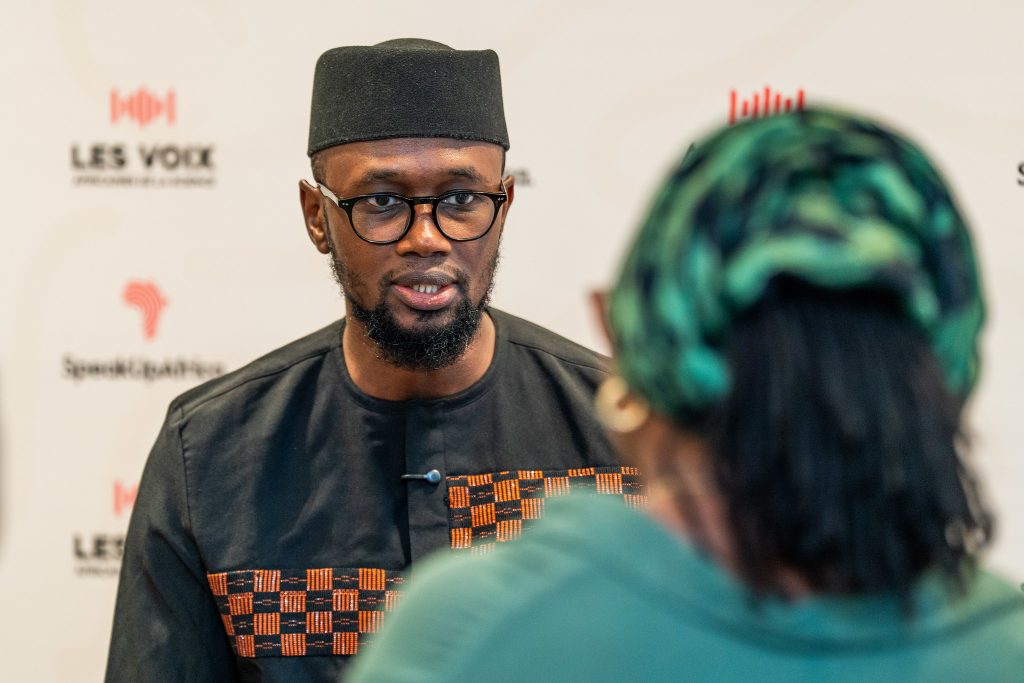
The private sector also expressed a willingness to strengthen coordination. Kantome Saleh Ndiaye, Head of Public Affairs and Partnerships at Endeavour Mining, the operator of Sabodala Gold Operations Sénégal (SGO), welcomed the Forum and the opportunity it provided to bring stakeholders from the extractive sector closer together.
“The idea today is to create synergies among the actions that mining companies undertake each year,” she said.
She noted that mining companies already invest in local communities, particularly through their corporate social responsibility strategies. Better coordinating these efforts around health priorities could help increase their impact and accelerate progress towards malaria elimination.
Endeavour Mining, through Sabodala Gold Operations (SGO), Petowal Mining Company (PMC), and Boya SA, took part in the discussions.
A Barometer to Better Track Health Investments
One of the highlights of the Forum was the presentation and discussion of a tool designed to track mining-sector investments in health. The tool aims to improve visibility into companies’ contributions and how these align with the priority needs of local communities.
Participating companies expressed strong interest in the tool, viewing it as a way to build confidence in health investment initiatives. With greater visibility into health priorities, target areas and planned interventions, companies will be better positioned to identify opportunities for complementary action and assess the relevance of proposed initiatives.
The barometer is therefore intended to facilitate dialogue among companies, the Regional Health Directorate, health districts and other stakeholders, drawing on information that can support decision-making.
Its implementation will require further clarification of indicators, data collection and verification responsibilities, data access arrangements, and information-sharing rules. Company-specific data must remain confidential, and any publication of such information will be subject to prior validation by the companies concerned.
The Forum also opened discussions on opportunities to better reflect mining companies’ health contributions through the transparency and reporting mechanisms of the Extractive Industries Transparency Initiative (EITI) in Senegal.
This discussion will need to continue with the relevant institutions to explore the possibilities offered by existing mechanisms, in line with EITI’s mandate and applicable reporting frameworks. It also addresses a broader objective: making contributions more visible, improving transparency and strengthening trust in extractive-sector investments that benefit local communities.
The Kédougou Declaration: Six Priorities for Turning Dialogue into Action
At the conclusion of the discussions, participants adopted the Kédougou Declaration, expressing their commitment to continued dialogue and to making domestic resource mobilization a driver of progress towards malaria elimination.
The Declaration identifies six priority areas:
- Make malaria elimination a territorial priority by better integrating health needs into local development plans and investment programmes.
- Strengthen the mobilization and use of domestic resources by exploring existing financing mechanisms and opportunities to diversify funding sources.
- Consolidate the contribution of the extractive sector by encouraging mining companies to continue their initiatives and align them with health priorities.
- Strengthen transparency and the tracking of health investments through an appropriate monitoring tool and further consideration of existing reporting mechanisms.
- Promote inclusive and coordinated governance by strengthening dialogue among health authorities, local governments, companies, civil society, communities and partners.
- Develop an operational roadmap identifying priority actions, target areas and populations, monitoring indicators, and coordination arrangements.
The Declaration calls for continued consultations to develop a regional roadmap and envisages an initial technical follow-up meeting in the first quarter of 2027.
The responsibilities, timelines and implementation arrangements will need to be confirmed by the parties concerned, in accordance with the validation procedures of each institution and company. The Declaration therefore does not constitute an automatic financial commitment or an obligation for companies to pool their budgets.
Building Sustainable Partnerships for a Malaria-Free Kédougou
For Speak Up Africa, the Kédougou Forum highlights the importance of dialogue between public authorities, health stakeholders, the private sector and communities in strengthening domestic resource mobilisation.
The challenge is not simply to mobilise more resources, but also to better coordinate those that already exist, direct them towards priority needs and monitor the results achieved.
By fostering greater alignment between mining sector investments and regional health priorities, this initiative opens up opportunities for collaboration to support interventions that are more coherent, better targeted and sustainable.
The Kédougou Declaration thus lays the groundwork for an ongoing consultation process, with the next step being to translate the agreed priorities into concrete actions that can be monitored over time.
Together, let’s mobilise our resources, coordinate our efforts and measure our progress towards a malaria-free Kédougou.